20th October 2026
New Tesla Roadster: An Overpriced Gimmick or The Future?
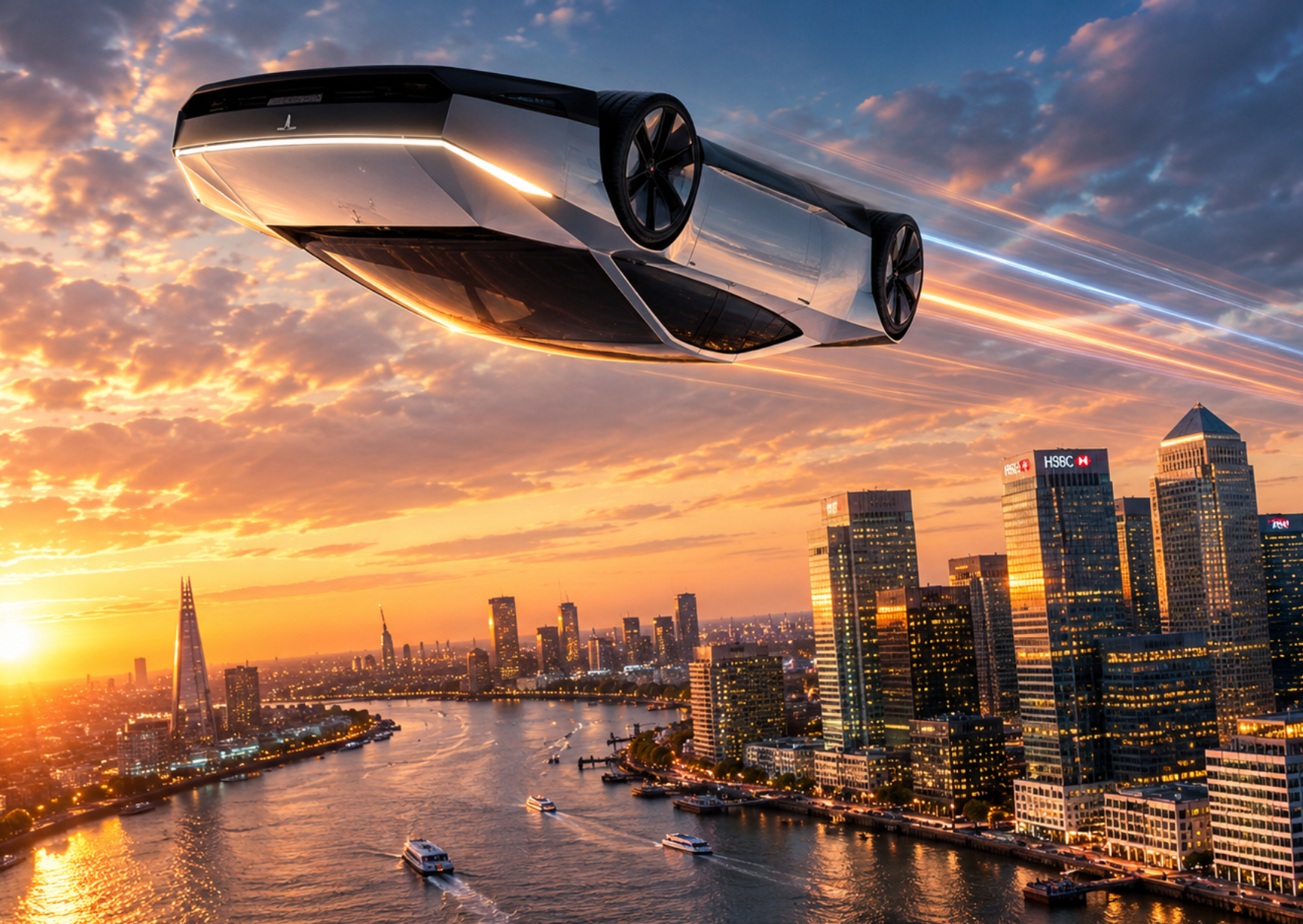
Elon Musk has finally revealed the long-awaited new Tesla Roadster, and it is unlike almost any electric car we have seen before. Unveiled in October 2026, the latest version of Tesla’s electric supercar demonstrated acceleration from 0–60 mph in less than one second, driving upside down and even launching into the air using technology developed with SpaceX.
But while the demonstration has captured the attention of the motoring world, major questions remain. How much will the new Tesla Roadster cost? What is the difference between the Performance, Thrust and Rocket models? And, perhaps most importantly, will drivers ever be allowed to use its rocket-powered features on public roads in the UK?
With production currently targeted for 2028, here is everything you need to know about the new Tesla Roadster, its headline features, expected costs and whether its most extraordinary capabilities will make it into everyday motoring.
What Is the New Tesla Roadster?
The Tesla Roadster is an all-electric sports car designed to push the limits of acceleration, handling and performance. The second-generation model was originally announced in 2017, but development has taken considerably longer than initially expected.
The latest unveiling takes the concept further by combining Tesla’s electric vehicle technology with SpaceX-inspired propulsion systems. Rather than simply competing with conventional petrol-powered supercars, the new Roadster aims to demonstrate what happens when automotive engineering meets aerospace technology. Tesla has now outlined three configurations: Performance, Thrust and Rocket. Each offers a different level of capability, with the Rocket version taking the concept beyond traditional road-car performance.
However, it is important to distinguish between a dramatic prototype demonstration and a finished production vehicle. The final specifications, delivery schedule and permitted use of some features could change before customer cars are delivered.
Tesla Roadster Key Features: What Can It Actually Do?
The new Roadster’s most talked-about features go far beyond those of a conventional electric sports car.
- Acceleration from 0–60 mph in under one second - During the unveiling, Tesla demonstrated a claimed 0–60 mph time of approximately 0.8 seconds with the prototype using its thruster technology. That would be an extraordinary figure, although the demonstration result should not be treated as a verified specification for every production model. For context, the original second-generation Roadster specifications advertised a 0–60 mph time of 1.9 seconds. The latest demonstration suggests Tesla is aiming for a completely different level of acceleration.
- SpaceX-inspired rocket thrusters - The Thrust and Rocket configurations are designed to use cold-gas thrusters supplied through Tesla’s collaboration with SpaceX. These systems use highly pressurised gas to generate force rather than conventional combustion-powered rocket engines. The technology could provide additional acceleration and, on the most advanced version, controlled movement beyond the normal limits of a road car. However, its practical use will depend on engineering, safety, certification and the final production specification.
- Driving upside down - One of the most surprising moments of the unveiling was the Roadster travelling upside down along a curved structure. Tesla demonstrated a fan-based suction system designed to create enough grip to hold the vehicle against a surface. This is very different from simply relying on tyres and aerodynamic downforce. The system could have specialist applications for traction and performance, but the upside-down demonstration took place in a controlled environment. Drivers should not assume that this feature will be available for use on ordinary roads, race circuits or public infrastructure.
- Flying and mid-air manoeuvres - The Rocket configuration is described as having additional thrusters around the vehicle to support upward movement, forward propulsion and lateral rotation. The demonstration included the prototype launching into the air, performing a manoeuvre and landing. This is arguably the Roadster’s most ambitious feature, but it also creates the biggest regulatory challenge. A vehicle capable of leaving the ground introduces risks that ordinary road-car legislation was not designed to manage.
- Advanced aerodynamics and active downforce - The Roadster also features an active rear wing and a multi-mode fan system intended to improve grip and stability. These technologies are designed to help the vehicle maintain traction at speed and potentially improve cornering performance. Unlike the flying and upside-down demonstrations, aerodynamic systems have established applications in high-performance motorsport. Their effectiveness will ultimately depend on the finished car, the conditions in which it is driven and independent testing.
- A futuristic two-seat cabin - The Performance and Thrust configurations are described as two-seaters, while the Rocket version is intended to have a single seat to accommodate its more extensive propulsion system. The unveiling also showed a distinctive steering control, a large central display and dramatic butterfly-style doors. The final interior design, equipment levels and practical storage arrangements remain important details for buyers to assess before committing to a purchase.
How Much Will the New Tesla Roadster Cost?
One of the biggest questions surrounding the Tesla Roadster is its price. Tesla has not provided a fully confirmed final purchase price for each of the three configurations. The company’s reservation information distinguishes between the different versions, but the amount required to reserve a vehicle is not the same as its final retail price. Here is what is currently known.
- Performance - Two seats, active aerodynamics and fan-based suction system. Final purchase price not confirmed. A reported £50,000 reservation deposit is not the vehicle price.
- Thrust - Two seats, suction system and rear-mounted cold-gas thrusters. Final purchase price not confirmed. A reported $250,000 reservation deposit is not the vehicle price.
- Rocket - Single seat, thrusters around the vehicle and claimed flight capability. Invitation-only configuration; final price has not been confirmed.
Tesla previously indicated that the second-generation Roadster would start at around $200,000, with a limited Founders Series historically advertised at $250,000. These were earlier announced prices and should not be treated as confirmed prices for the newly revealed configurations. The latest versions introduce significantly different technology, particularly the Rocket configuration. The final pricing could therefore differ considerably from the original figures.
For UK buyers, the eventual cost could also be affected by exchange rates, taxes, delivery charges, specification choices and whether a particular version is approved for use in Britain.
The key takeaway: do not confuse a reservation deposit with the purchase price. Before placing a substantial deposit, buyers should confirm the latest terms, refund conditions, delivery expectations and the exact specification being reserved.
Will the Tesla Roadster Really Go into Production in 2028?
Tesla is targeting 2028 for production, but the Roadster’s history means buyers should approach the timeline with caution.
The second-generation car was first announced in 2017, with much earlier delivery expectations. The subsequent delays demonstrate how difficult it can be to turn ambitious engineering targets into a commercially available vehicle. The new propulsion systems add further complexity. Tesla must ensure the technology can operate reliably, withstand repeated use and meet the relevant safety and regulatory requirements.
A successful demonstration is an important milestone, but it does not automatically mean that every feature is ready for mass production. Potential buyers should therefore consider the 2028 date a target rather than a guaranteed delivery date until Tesla confirms a production schedule and begins fulfilling customer orders.
Will the UK Government Allow the Tesla Roadster to Fly?
This is where the Roadster becomes particularly interesting. The UK already has a framework for approving road vehicles, covering areas such as construction, safety, braking, lighting and emissions where applicable. A vehicle that can generate thrust, leave the ground or travel upside down presents a very different challenge. Elon Musk has acknowledged that the Roadster’s capabilities may not be legal in every jurisdiction. Tesla has also indicated that the Rocket configuration’s flight capability is not approved for public-road use.
In practical terms, several issues would need to be addressed before these features could be used legally.
Road safety and driver control - A car that leaves the road or generates thrust near pedestrians, cyclists and other vehicles creates risks beyond those associated with ordinary driving. Regulators would need evidence that the vehicle can be operated safely and that its systems cannot create unacceptable hazards.
Vehicle type approval - A production Roadster would need to satisfy the applicable requirements for its intended use. Approval of a road-going version would not automatically authorise its flight or thrust systems to be used on public roads.
Airspace and aviation rules - If a vehicle can genuinely fly, aviation requirements may become relevant alongside road-vehicle legislation. Rules governing where, when and how aircraft can operate would need to be considered. A car being road-legal does not mean it is automatically permitted to fly.
Insurance and liability - Insurers would need to understand the risks associated with the vehicle and its propulsion systems. If a driver used a thrust feature and caused damage or injury, questions of liability and insurance cover would be significant.
Public infrastructure - Driving upside down on a road, bridge, tunnel or public structure would create obvious safety and infrastructure concerns. Even if the technology works, that does not mean authorities would allow drivers to use it in public spaces.
The likely outcome is that the conventional road-driving functions could be treated separately from the more experimental capabilities. A version approved for normal road use may not be permitted to activate its flying or upside-down features outside controlled environments. That is an assessment of the likely regulatory challenges, not confirmation of a final UK licensing decision.
Will Drivers Ever Be Allowed to Use the Rocket Thrusters?
The idea of pressing a button and launching a car into the air sounds exciting, but there is a substantial difference between demonstrating a technology and allowing members of the public to use it. The prototype demonstration was conducted in a controlled setting, and the vehicle was reportedly operated remotely for safety. That matters: it shows the demonstration was not equivalent to an ordinary customer driving the car on a public road.
There are several possible outcomes.
- Road use: The standard driving functions could be approved if the vehicle meets the relevant requirements.
- Track use: Some advanced performance features might be permitted at specialist facilities, subject to the venue’s rules, safety measures and any applicable approvals.
- Controlled demonstrations: Flight or thrust manoeuvres could remain limited to private test sites or specially authorised events.
- Public-road flight: This is the most difficult scenario and should not be assumed to become legal simply because the technology works.
The same principle applies to the upside-down feature. A system capable of holding a vehicle against a purpose-built track structure does not mean it would be safe or legal to use on a normal road.
Until Tesla and the relevant authorities confirm otherwise, buyers should regard the most extreme features as specialist capabilities rather than everyday driving functions.
Is the Tesla Roadster Practical in the Real World?
For most buyers, the question is not simply whether the Roadster can achieve extraordinary performance. It is whether those capabilities make sense outside a demonstration.
- Where the technology could make a difference - The Roadster’s electric powertrain, active aerodynamics and advanced traction systems could offer genuine benefits in acceleration, handling and performance. These are technologies with potential applications beyond a single showpiece vehicle. The project could also help demonstrate what is possible when automotive and aerospace engineering teams work together.
- Where practicality becomes a concern - Rocket thrusters and flight systems introduce additional complexity, weight, maintenance requirements and safety considerations. The need to manage pressurised systems, specialist components and regulatory restrictions could make the most advanced version expensive and difficult to use. There is also a question of everyday usability. A single-seat Rocket model designed around flight systems will appeal to a different customer from someone seeking a comfortable two-seat electric sports car.
And even if the technology works perfectly, there is little practical benefit to being able to fly if the feature cannot legally be used where the owner wants to drive. The Roadster could therefore become a genuine technological achievement without every headline feature becoming part of everyday motoring.
Tesla Roadster vs Traditional Supercars: Is It Worth the Money?
The new Roadster will face competition from established high-performance electric cars and traditional supercars. Its appeal will depend on more than acceleration figures. Potential buyers will need to consider:
- Performance: How the production car performs under independent testing, rather than relying solely on demonstration claims.
- Range and charging: The final real-world range, charging speed and efficiency under normal driving conditions.
- Reliability: How the complex systems perform over time and how readily specialist repairs can be carried out.
- Usability: Whether the car is comfortable, practical and suitable for the owner’s intended use.
- Ownership costs: Insurance, tyres, servicing, depreciation, repairs and the cost of maintaining any specialist propulsion equipment.
- Resale value: Whether demand remains strong after the initial excitement surrounding the launch.
The Roadster may offer technology that no conventional supercar can match, but that does not automatically make it the best purchase. Buyers will need to weigh the innovation against the price, practical benefits and long-term cost of ownership.
What Does the Tesla Roadster Mean for the Future of Electric Cars?
The Roadster represents a more extreme direction for electric vehicle development. It demonstrates how electric drivetrains can be combined with advanced aerodynamic systems and, in this case, technology inspired by rocket engineering. However, the biggest long-term impact may not be flying cars on every street. It could be the development of better traction systems, more effective aerodynamics, improved control technology and new approaches to high-performance vehicle design.
The Roadster also highlights an important reality for the automotive industry: engineering breakthroughs must still be commercially viable, safe and legally usable. A feature can be technically impressive but have limited value if it adds significant cost, complicates maintenance or cannot be used in the environments where customers drive.
For the wider electric vehicle market, the technologies that prove most useful will be those that translate into real benefits for owners.
Final Thoughts: A Revolutionary Car or an Expensive Engineering Experiment?
Elon Musk’s new Tesla Roadster is undoubtedly one of the most ambitious vehicle projects to emerge in recent years. Its claimed sub-second acceleration, SpaceX-inspired thrusters, suction-based grip system and flying demonstrations have pushed the boundaries of what people expect from an electric sports car. But the biggest questions remain unanswered. Final prices for the Performance, Thrust and Rocket configurations have not been confirmed, production is targeted for 2028, and the most extreme capabilities face significant regulatory challenges.
The Roadster could become a landmark in automotive engineering. Equally, some of its most spectacular features may remain restricted to specialist demonstrations, private facilities or limited-use applications. For potential buyers, the sensible approach is to separate the excitement of the unveiling from the details that will determine the ownership experience: final specifications, purchase price, delivery date, road approval, insurance and long-term running costs.
At Find & Finance, we believe choosing a vehicle should always involve looking beyond the headline figures. Whether you are considering an electric vehicle, a prestige car or a commercial fleet, understanding the full cost of ownership is essential to making the right decision.
Speak to Find & Finance About Your Next Vehicle
Looking for your next car, van or prestige vehicle? Find & Finance offers a fully managed motoring service designed to make vehicle sourcing, finance and ongoing ownership simpler. From finding the right vehicle and arranging finance to inspections, preparation and aftersales support, we help customers make informed decisions based on their needs and budget.
Call: 0333 006 3825
Email: sales@findandfinance.co.uk
Website: https://findandfinance.co.uk
Stay ahead of the latest automotive news, vehicle buying advice and market insights by subscribing to our newsletter here