
13th August 2026
UK Automotive Industry Gets Major Funding Boost
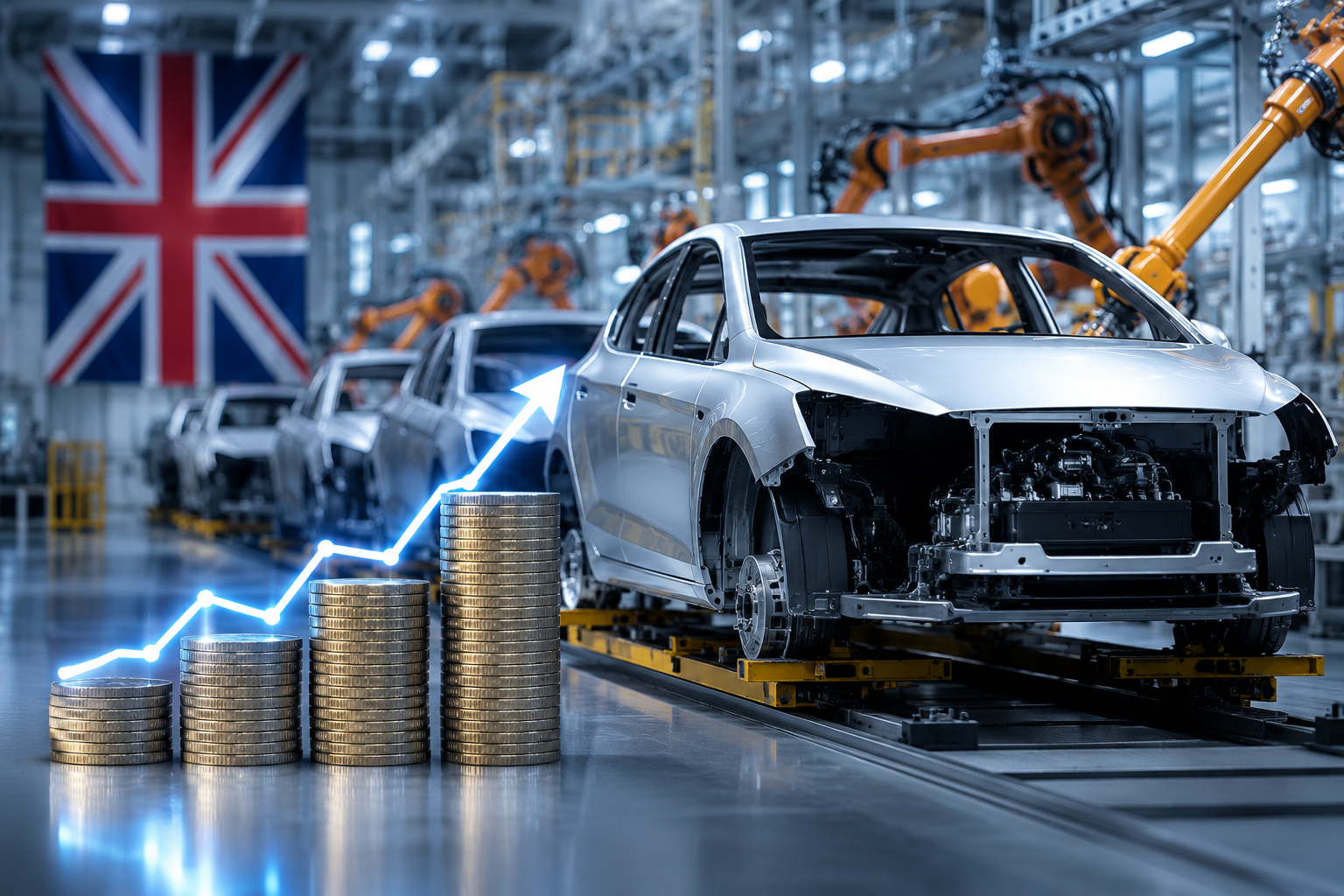
The UK automotive industry is entering another important phase of its transformation, with significant new investment being directed towards electric vehicles, advanced manufacturing and the technologies expected to shape the next generation of cars and commercial vehicles.
The latest funding announcements represent a combined push to strengthen Britain's position as an automotive manufacturing hub while helping businesses develop the technology needed for a lower-emission future. For drivers and businesses, this could eventually mean more affordable electric vehicles, improved technology, stronger UK supply chains and a wider choice of next-generation vehicles.
But there is a bigger question: can investment at this scale help the UK automotive industry compete with the rapidly expanding global EV market?
Quick Answer
The UK Government has announced almost £130 million of investment into next-generation automotive technology, with more than £65 million of government funding being matched by industry across projects designed to accelerate zero-emission vehicle development, advanced manufacturing and connected mobility. The investment is expected to support more than 1,800 high-value jobs, while additional funding is being directed towards smaller businesses and technology developers working on the future of automotive manufacturing.
The objective is not simply to put more electric cars on UK roads. It is about ensuring that the technology, components and expertise behind those vehicles can increasingly be developed and manufactured within Britain. For the UK automotive industry, that could prove particularly important as manufacturers face increasing competition from Europe, the United States and rapidly growing Chinese automotive brands.
What Is the UK Government Investing In?
The latest funding forms part of a wider strategy to accelerate the UK's transition towards zero-emission vehicles and modernise its automotive manufacturing base.
Around £50 million of government funding is being allocated to projects designed to help innovative automotive technologies move closer to commercial production. A further £17 million is being invested into connected and automated mobility projects. The projects cover a broad range of technologies, including:
- Electric vehicle technology
- Battery development
- Electric powertrains
- Advanced manufacturing
- Automated and connected vehicles
- Artificial intelligence
- Vehicle sensors
- Commercial vehicle technology
- New automotive materials
- Supply-chain development
This is significant because the future of the automotive industry will not be determined solely by which manufacturer sells the most cars. The companies developing the batteries, motors, software, electronics and manufacturing technologies behind those vehicles could become just as important.
Why Is This Investment Important for the UK Automotive Industry?
Britain has a long history of automotive manufacturing, but the industry is undergoing one of its biggest transformations in decades. Traditional vehicle manufacturing has relied heavily on petrol and diesel engines, mechanical components and established global supply chains.
Electric vehicles require a very different manufacturing ecosystem. Batteries, electric motors, semiconductors, software and advanced electronics are becoming increasingly important, while automated driving and connected technology are creating entirely new areas of development.
The Government's investment is therefore an attempt to ensure that Britain does not simply become a market for electric vehicles manufactured elsewhere. Instead, the ambition is to keep more of the research, engineering, manufacturing and supply-chain activity within the UK. That could help protect jobs while creating opportunities for new businesses entering the automotive technology sector.
More Than Just Electric Cars
Although electric vehicles are at the centre of much of the investment, the projects being supported go considerably further. The UK's future automotive sector is likely to involve vehicles that are increasingly connected, automated and software-driven. That could include technologies such as:
- Advanced driver assistance systems - Vehicles are becoming increasingly capable of monitoring their surroundings and assisting drivers with braking, steering and safety.
- Connected vehicles - Cars and commercial vehicles are increasingly able to communicate with infrastructure, other vehicles and cloud-based services.
- Automated mobility - Investment is also being directed towards technologies that could eventually enable autonomous or semi-autonomous transport services.
- Advanced battery technology - Improving battery performance, charging speeds, cost and manufacturing efficiency will be critical to making electric vehicles more competitive.
- Electric commercial vehicles - The transition is not limited to passenger cars. Electric vans and other commercial vehicles will increasingly form part of the UK's zero-emission transport strategy.
Could This Make Electric Vehicles Cheaper?
Potentially, yes. One of the biggest challenges facing electric vehicle adoption in the UK remains the cost of new EVs.
Battery technology is expensive, and manufacturers are under pressure to invest billions into developing new electric platforms while simultaneously competing with increasingly competitive international manufacturers.
Investment in British technology could help reduce manufacturing costs over time. The Government has specifically positioned the latest funding as a way of helping develop technologies that could eventually make electric vehicles more affordable for consumers.
However, drivers should not expect these investments to immediately reduce the price of a new EV. Research and development projects can take years to move from laboratory development to mass production.
The potential benefit is longer term: better technology, more efficient manufacturing and stronger domestic supply chains could gradually reduce costs.
What Does This Mean for UK Car Buyers?
For the average driver, Government investment in automotive research may seem disconnected from the decision of which car to buy. In reality, it could influence the market considerably over the next decade. Greater investment in EV technology should encourage manufacturers to develop:
- Longer-range electric vehicles
- Faster charging systems
- More affordable batteries
- More efficient electric motors
- Better vehicle software
- Improved driver assistance technology
- More competitive electric vans
- Greater choice across different vehicle segments
This could make the decision to switch from petrol or diesel to electric considerably easier for drivers who currently have concerns about cost, range or charging.
What Does It Mean for Businesses and Fleets?
The impact could be even more significant for businesses operating multiple vehicles. Commercial fleets are increasingly being asked to consider emissions, operating costs and future legislation when replacing vehicles.
Electric vans can already make sense for businesses with predictable routes and access to charging, but the technology is developing rapidly. Future electric commercial vehicles could offer:
- Longer usable ranges
- Faster charging
- Greater payload efficiency
- Lower running costs
- Improved fleet monitoring
- More advanced driver technology
For SMEs and larger fleet operators, this means vehicle replacement decisions are becoming increasingly strategic.
Choosing the right vehicle is no longer simply about purchase price. Businesses need to consider the total cost of ownership, financing, fuel or charging costs, taxation, maintenance, downtime and future resale value.
The UK's Automotive Supply Chain Could Be the Biggest Winner
One of the most interesting aspects of the latest investment is the focus on businesses behind the vehicles themselves.
The Government says the wider programme is designed to support thousands more jobs throughout the supply chain, alongside the more than 1,800 roles directly associated with the latest projects. That could benefit companies involved in everything from battery materials and electrical systems to software and specialist manufacturing. For the UK automotive industry, developing a resilient domestic supply chain could become increasingly important.
Recent global events have demonstrated how quickly shortages of critical components can disrupt vehicle production. A stronger UK-based supply network could therefore provide manufacturers with greater resilience while also creating new opportunities for British engineering businesses.
Is Britain Trying to Catch Up?
There is an argument that the UK has little choice. China has established itself as a major force in electric vehicle manufacturing, while European manufacturers are investing heavily in electrification and the United States continues to develop its own advanced automotive technology ecosystem. At the same time, Chinese brands are entering the UK market at an increasingly rapid rate.
For British manufacturers to remain competitive, simply producing vehicles is unlikely to be enough. They need to compete on technology, cost, efficiency and innovation. The latest investment suggests the UK Government recognises that challenge and is attempting to support the businesses developing the technology required to compete globally.
What Is DRIVE35?
A major part of the wider strategy is the DRIVE35 programme, which is intended to support the electrification and modernisation of Britain's automotive industry through to 2035. The programme represents a planned £4 billion investment in the UK's automotive sector, with ambitions including supporting future vehicle production, expanding battery manufacturing and strengthening domestic supply chains.
The latest projects therefore form part of a much larger transition rather than being a one-off investment. The long-term objective is to create an automotive industry capable of designing, developing and manufacturing the technologies required for the next generation of vehicles.
Could This Protect UK Automotive Jobs?
That is one of the clearest potential benefits. The shift away from traditional combustion engines represents a major challenge for workers and companies whose expertise has historically been centred around petrol and diesel technology.
Electric vehicles contain fewer traditional mechanical components, meaning some established manufacturing roles could eventually decline. Investment in new technology could help create alternative employment opportunities in areas such as:
- Battery manufacturing
- Software engineering
- Electrical engineering
- Artificial intelligence
- Automated driving
- Advanced materials
- Vehicle electronics
- Renewable energy technology
The Government estimates that the latest investment will support more than 1,800 high-value manufacturing jobs, with further employment supported throughout the wider supply chain.
What Happens Next?
The latest funding is likely to be the beginning rather than the end of Britain's automotive transformation. As manufacturers continue developing electric vehicles, businesses will increasingly need to adapt alongside them.
For consumers, that should ultimately mean greater choice.
For fleet operators, it could mean a wider range of electric commercial vehicles capable of meeting more demanding business requirements.
For British manufacturers, however, the pressure remains enormous. The UK is competing against some of the world's largest automotive economies at a time when the industry is changing faster than it has in generations. Investment can provide the foundations, but manufacturers and technology companies will ultimately need to turn that investment into products that customers actually want to buy.
Find & Finance's View
At Find & Finance, we believe the next stage of the UK's automotive industry will be defined by choice rather than simply one type of vehicle.
Electric vehicles will undoubtedly become increasingly important, but the right vehicle depends on how an individual or business actually uses it.
For a fleet operator, an electric van could be an excellent solution in the right circumstances. For another business, diesel may still provide the flexibility and range required for its operations.
That is why we believe vehicle decisions should be based on the whole picture, rather than simply following the latest automotive trend. As technology develops and new vehicles enter the UK market, having independent advice around vehicle sourcing, finance, running costs and suitability can become increasingly valuable.
Final Thoughts
The UK's automotive industry is changing rapidly, and the latest investment demonstrates just how seriously the transition towards next-generation vehicles is being taken.
The focus is no longer solely on building electric cars. It is about developing the batteries, software, manufacturing processes, components and technologies that will determine what vehicles look like over the next decade.
If successful, the investment could help Britain retain high-value automotive jobs, strengthen its supply chain and create a new generation of automotive technology businesses. For drivers and businesses, the eventual result should be greater choice, improved technology and potentially more affordable electric vehicles. But the biggest question is whether the UK can turn investment into genuine global competitiveness.
At Find & Finance, we will continue to follow the changes across the UK automotive industry and help our customers make informed decisions as the market evolves.
Looking for your next car, van or fleet vehicle? Whether you're considering electric, hybrid, petrol or diesel, our team can help you source the right vehicle, arrange finance and manage the process from start to finish.
Speak to Find & Finance today and let us help you find the right vehicle for your needs.
Call us: 0333 006 3825
Email us: sales@findandfinance.co.uk
Explore now: www.findandfinance.co.uk
Stay Ahead of Automotive Industry Trends. Subscribe to our newsletter here