
19th August 2026
UK Government Reviews the ZEV Mandate
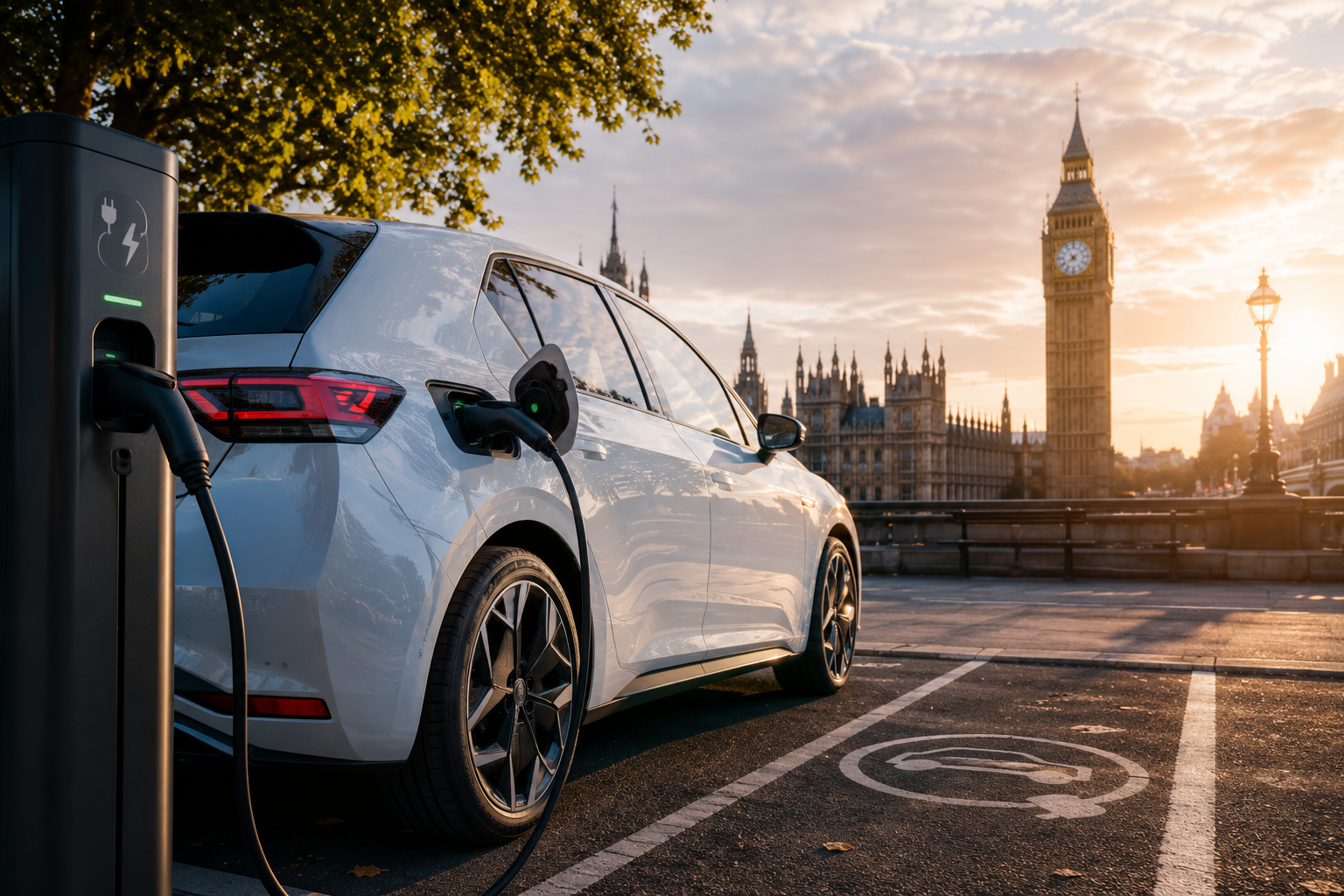
The UK's transition towards electric vehicles has entered another important stage. The Government has launched a fresh review of the Zero Emission Vehicle (ZEV) Mandate, inviting manufacturers, businesses, consumers and other organisations to have their say on how the UK should reach its long-term zero-emission driving ambitions.
The review does not mean the Government has abandoned its plans for electric vehicles. Instead, it is looking at whether the current rules are practical, commercially sustainable and capable of supporting the UK's automotive industry while still encouraging drivers to make the switch.
With the UK targeting the end of new petrol and diesel car sales by 2030 and all new cars and vans becoming zero emission by 2035, the outcome could have a major influence on the vehicles available to UK motorists over the next decade.
For drivers, businesses and fleet operators, this raises an important question: Is the UK's road to an electric future about to change?
Quick Answer
The Government has opened a consultation on the UK's ZEV Mandate, with views being sought on the annual sales targets manufacturers must meet as the country moves towards zero-emission new car and van sales. The consultation is scheduled to remain open until 23 October 2026.
The Government says the review is designed to ensure the transition remains realistic for manufacturers, supports investment and jobs, provides consumers with choice and keeps Britain competitive in a rapidly changing global automotive market.
Importantly, the Government's overall ambition has not changed: new petrol and diesel cars are still intended to be phased out from 2030, while the long-term objective remains for all new cars and vans to be zero emission by 2035.
What could change is how the industry gets there.
What Is the ZEV Mandate?
The Zero Emission Vehicle Mandate is one of the Government's main policies for increasing the number of electric vehicles sold in the UK. Rather than simply asking motorists to buy electric cars, the system places annual requirements on vehicle manufacturers. Manufacturers are expected to ensure an increasing proportion of the new cars and vans they sell are zero-emission vehicles.
The intention is straightforward: increase the availability and affordability of electric vehicles while encouraging manufacturers to accelerate investment in electric technology. It also gives manufacturers a strong incentive to offer competitive EV pricing, finance packages and a broader range of electric models. However, the automotive industry has changed considerably since the ZEV Mandate was originally designed.
That is why the Government is now reviewing whether the existing framework remains appropriate.
Why Is the Government Reviewing the ZEV Mandate?
The automotive industry is facing a very different set of circumstances compared with when the current rules were established. Manufacturers are dealing with:
- Global trade uncertainty
- Tariffs and changing international trade relationships
- Supply-chain pressures
- Increasing competition from Chinese EV manufacturers
- High investment costs associated with electrification
- Rapid changes in battery technology
- Consumer affordability concerns
- Different levels of charging infrastructure across the UK
At the same time, electric vehicle sales are growing. The Government says more than one in four new cars sold are now electric, while EV registrations were up 45% year-on-year in July 2026. More than two million electric vehicles are now registered on UK roads.
This creates an interesting situation. The Government wants to accelerate electrification, but it also needs to make sure the rules do not unintentionally damage the manufacturers, dealers and supply chains that support the UK's automotive economy.
Is the 2035 EV Target Being Scrapped?
No. This is probably the most important distinction to make. The Government has not announced that the 2035 zero-emission target has been cancelled. The consultation is instead examining the pathway towards that objective and whether the current annual manufacturer targets remain suitable. The existing policy direction remains:
- 2030: New petrol and diesel cars are intended to be phased out.
- 2035: New cars and vans are intended to be zero emission.
The review could therefore alter the way manufacturers are expected to reach these milestones without necessarily changing the final destination. For anyone considering buying a petrol, diesel, hybrid or electric vehicle, this distinction matters. The Government is reviewing the route -not abandoning the destination.
What Does This Mean for Car Manufacturers?
For manufacturers, the ZEV Mandate represents a significant commercial challenge. Producing more electric vehicles requires enormous investment in:
- Battery technology
- New vehicle platforms
- Electric motors
- Software
- Charging technology
- Manufacturing facilities
- Supply chains
Manufacturers also have to convince customers to buy those vehicles. That means an automaker could technically produce a large number of EVs, but if consumers are unwilling or unable to purchase them, the commercial consequences can be significant. This is where the Government's review becomes particularly important. The aim is to establish whether the current targets are pushing the industry forward at an appropriate pace while still allowing manufacturers to operate sustainably.
Why Consumer Demand Matters
Government policy can encourage the production of electric vehicles. It cannot guarantee that every driver wants one. For many motorists, the decision still comes down to practical considerations.
- Price - Is an EV affordable compared with an equivalent petrol or hybrid vehicle?
- Range - Can the vehicle comfortably handle the driver's regular journeys?
- Charging - Can the owner charge at home, at work or conveniently during longer journeys?
- Running costs - Will switching to electric actually save money?
- Vehicle choice - Is there an EV that fits the buyer's lifestyle?
These factors are becoming increasingly important as the Government tries to move millions of motorists towards zero-emission driving. The latest review acknowledges the importance of making the transition work for consumers as well as manufacturers.
EVs Are Becoming More Competitive
One of the strongest arguments for continuing the transition is that electric vehicles are becoming considerably more capable. Modern EVs can offer:
- 250+ mile driving ranges
- Rapid charging
- Lower servicing requirements
- Advanced technology
- Strong performance
- Lower home-charging costs
- Increasingly competitive finance deals
There is also far greater choice. Electric hatchbacks, SUVs, executive cars, performance vehicles and commercial vans are now available from a growing number of manufacturers. Chinese automotive brands have also introduced increasingly competitive EVs into the UK, adding further pressure on established manufacturers to improve pricing and specifications. That competition could ultimately benefit consumers.
What About Electric Vans?
The ZEV Mandate is not just about passenger cars. Commercial vehicles and electric vans are also part of the UK's zero-emission transition. For businesses, this could become particularly significant. A company operating vehicles every day needs to consider far more than simply the purchase price. It needs to assess:
- Daily mileage
- Payload
- Charging availability
- Vehicle downtime
- Finance costs
- Maintenance
- Taxation
- Driver requirements
- Resale value
An electric van could be an excellent solution for a business operating predictable local routes. For another company covering hundreds of miles every day without reliable charging access, diesel may remain more practical. That is why the transition needs to account for different types of businesses rather than assuming one solution works for everyone.
What Is the Government Doing to Support EV Adoption?
The ZEV Mandate is only one part of the Government's wider electric vehicle strategy. The Government says it is investing £7.5 billion to support the transition, including funding for EV manufacturing, charging infrastructure and vehicle grants. The Electric Car Grant is another major part of the strategy, with eligible motorists able to receive up to £3,750 towards a new electric vehicle. The Government says more than 160,000 drivers have already benefited from the scheme.
Charging infrastructure is also being expanded. More than 120,000 public charging points are currently available, alongside charging infrastructure in homes and workplaces, with additional Government funding being allocated to increase the network further.
Could the Review Make Buying an EV More Attractive?
Potentially. If the review results in a more commercially sustainable transition, manufacturers could have greater confidence to invest in new models and technologies. That could lead to:
- More affordable EVs
- Greater competition could put downward pressure on prices.
- More choice
- Manufacturers may continue launching electric alternatives across different vehicle categories.
- Better technology
- Competition should encourage improvements in batteries, charging and vehicle software.
- More competitive finance
As manufacturers compete for EV customers, finance and leasing offers could become increasingly attractive. For buyers, this could be one of the most interesting consequences of the review.
What Could Happen to Petrol and Diesel Cars?
The review does not mean petrol and diesel cars are suddenly disappearing. There will continue to be millions of combustion-engine vehicles on UK roads for many years. The important distinction is between new vehicle sales and vehicles already in circulation. Even after the 2030 milestone, existing petrol and diesel cars will not simply become illegal to drive.
The UK will continue to have a large used-car market consisting of petrol, diesel and hybrid vehicles. This means motorists will still have choices long after the Government's new-car targets come into effect.
What Does the Review Mean for Company Car Drivers?
Company car drivers have another major factor to consider: Benefit-in-Kind taxation. Electric vehicles currently benefit from relatively favourable company car tax rates compared with many petrol and diesel alternatives.
This has made EVs particularly attractive to businesses and employees using company car schemes. The continued expansion of electric vehicles could therefore have a major impact on the UK's business vehicle market.
For employers, choosing the right company car policy is becoming increasingly important. A vehicle that looks expensive based purely on its list price could potentially be considerably more cost-effective once finance, taxation, fuel or charging and maintenance are taken into account.
Find & Finance's View
At Find & Finance, we believe the biggest mistake motorists and businesses can make is choosing a vehicle simply because the Government says it is the future. The right vehicle should be based on how you actually use it.
For one driver, an electric car may offer lower running costs, excellent performance and significant tax advantages. For another, a hybrid could provide the perfect balance between electric driving and long-distance flexibility.
For a commercial business, diesel may still be the most practical option depending on mileage, payload and operating requirements. Our role is to understand those requirements before recommending a vehicle. As the ZEV Mandate develops and manufacturers continue adapting their ranges, having someone who can look at the wider financial and practical picture could become increasingly valuable.
What Happens Next?
The Government's ZEV Mandate consultation is open until 23 October 2026. Following the consultation, the Government will consider the responses before deciding whether changes are required to the current framework. Until then, manufacturers, dealers, businesses and motorists are effectively watching the same question:
How quickly can the UK transition to zero-emission driving without making the process too expensive or disruptive? The answer will shape the UK automotive market for years to come.
Final Thoughts
The UK's electric vehicle transition is no longer a question of whether EVs will become a major part of the market. They already are.
The more complicated question is how quickly the UK should move towards an entirely zero-emission new vehicle market -and how that transition can be made affordable for everyone.
The ZEV Mandate review could prove to be an important moment. It gives manufacturers the opportunity to highlight the commercial challenges they face, while giving consumers and businesses the chance to influence how the transition affects them.
The Government's 2030 and 2035 ambitions remain in place for now, but the rules governing the journey are being reconsidered.
For anyone thinking about changing their car or commercial vehicle, that makes independent advice more important than ever.
At Find & Finance, we can help you understand your options, source the right vehicle, arrange suitable finance and manage the process from start to finish -whether you're looking for an electric vehicle, hybrid, petrol or diesel.
Looking for your next vehicle? Speak to Find & Finance today and let us find the right solution for you.
Stay Ahead of Automotive Industry Trends. Subscribe to our newsletter here